
That adorable puppy staring at you from behind the breeder’s fence? It might come with a monthly insurance bill that rivals your streaming subscriptions — combined.
While the average dog insurance premium in the U.S. sits around $44 to $62 per month, some breeds blow right past that number, with annual premiums exceeding $1,400. That’s 264% higher than the national average, according to data from Insurify.
But here’s the thing — the dogs that cost the most to insure often need insurance the most. They’re the breeds with shorter lifespans, genetic health landmines, and bodies so large that every medication, anesthesia dose, and surgical implant costs double or triple what it would for a smaller dog.
Whether you’re considering bringing home a gentle giant or you already own one, understanding why certain breeds carry steeper premiums can help you budget wisely and avoid financial surprises at the vet’s office.
What Makes Some Dog Breeds More Expensive to Insure?
Before diving into the list, it helps to understand the math behind the markup. Insurance companies don’t pull premium numbers out of thin air. They rely on actuarial data — historical records of how often a breed files claims and how much those claims cost.
Three factors drive the biggest differences in dog insurance premiums:
1. Genetic predispositions
Breeds with known hereditary conditions like heart disease, cancer, or hip dysplasia cost more because claims are predictable and frequent. A Bernese Mountain Dog’s near-certainty of developing cancer, for example, is already baked into the premium.
2. Body size
Larger dogs need more anesthesia, bigger surgical implants, and higher medication doses. A cruciate ligament repair on a Mastiff costs roughly double what the same surgery costs on a Beagle. Everything scales up.
3. Lifespan
Shorter-lived breeds compress their medical costs into fewer years, which raises the insurer’s risk. A dog expected to live just 6–8 years is statistically more likely to generate expensive claims during the policy period than one expected to reach 14.
4. Your location matters too
Vet costs in New York City run 20–40% above the national average, pushing premiums higher for every breed. And older dogs within any breed will always pay more than puppies — another reason to lock in coverage early.
Now that you understand what will determine your pet insurance premium, here are the 10 most expensive dog breeds to insure — and exactly what drives those costs up.
1. English Bulldog — $65–$100/Month

No breed dominates the top of insurance cost charts quite like the English Bulldog. The reason? Almost everything about this dog’s anatomy creates recurring medical expenses.
Brachycephalic airway syndrome is nearly universal in the breed, causing chronic breathing difficulty that often requires surgical correction costing $2,500–$5,000. Hip dysplasia, cherry eye, skin fold dermatitis, and chronic allergies round out a health profile that reads like a veterinary encyclopedia.
And here’s a number that catches most people off guard: over 80% of English Bulldogs are delivered via C-section because their heads are too large for natural birth.
Average annual claims for English Bulldogs regularly exceed $3,500, according to insurance industry data — which dwarfs the roughly $900–$1,200 you’d pay in annual premiums. That math makes the case for coverage pretty ironclad.
If you’re set on this breed, enroll the moment you bring your puppy home. Waiting even six months risks a pre-existing condition diagnosis that could exclude the very coverage you need most.
2. French Bulldog — $60–$90/Month

The French Bulldog has been one of the most popular breeds in America for several years running, which gives insurers an enormous pool of claims data. Unfortunately for Frenchie owners, that data paints an expensive picture.
French Bulldogs share the English Bulldog’s breathing issues but add intervertebral disc disease (IVDD) to the mix — a spinal condition that can cause partial or complete paralysis. Emergency IVDD surgery runs $6,000–$10,000.
Chronic ear infections, courtesy of narrow ear canals, pile on $200–$500 per episode. And then there are allergies, which many Frenchies battle year-round through prescription food ($80–$150/month) or medications like Apoquel.
These aren’t “maybe” expenses. They’re “when, not if” expenses for most Frenchie owners. A single IVDD surgery can exceed a decade of premiums. That’s the kind of financial math that makes pet insurance feel less like a luxury and more like a necessity.
3. Bernese Mountain Dog — $55–$85/Month
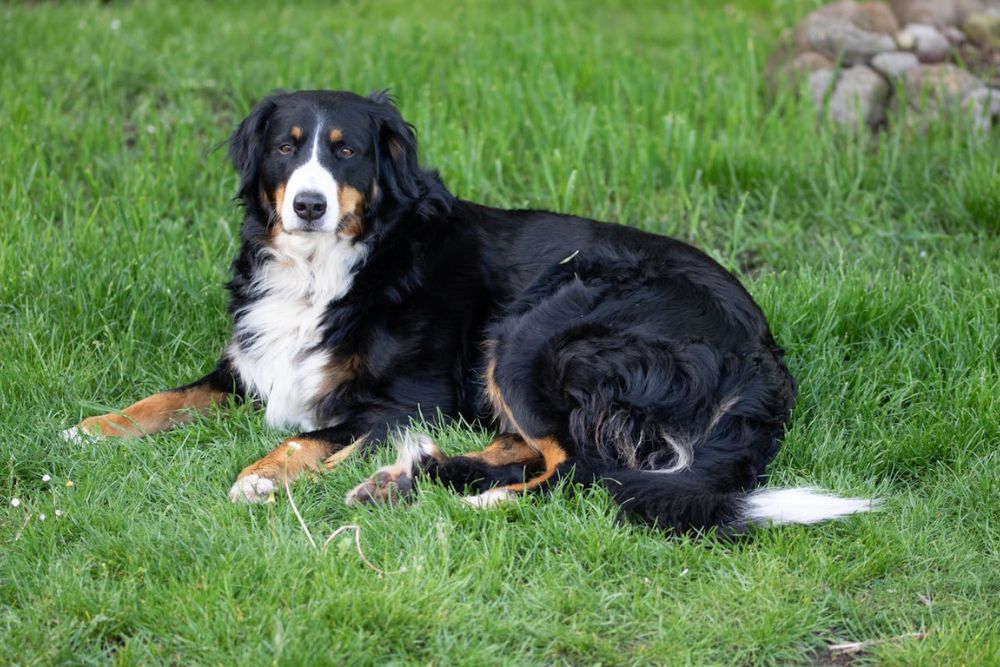
Beautiful, gentle, and heartbreakingly prone to cancer — that’s the Bernese Mountain Dog in a nutshell.
Studies estimate that cancer is the leading cause of death in this breed, affecting roughly 50–60% of all Bernese Mountain Dogs. Histiocytic sarcoma is particularly devastating and tends to strike during middle age. The breed’s average lifespan is just 6–8 years, which is short even by large-breed standards.
Cancer treatment in dogs isn’t cheap. Chemotherapy and surgery commonly run $5,000–$10,000 per case. On top of that, hip and elbow dysplasia are widespread in the breed, with joint replacement surgery costing $3,500–$7,000 per hip.
Given the near-certainty of at least one major health event during a Bernese’s relatively short life, insurance is practically non-negotiable for this breed.
4. Great Dane — $55–$85/Month

Everything about the Great Dane is enormous — including the vet bills.
The most urgent health threat is bloat, formally known as gastric dilatation-volvulus (GDV). This life-threatening emergency occurs when the stomach twists on itself, cutting off blood flow. Without immediate surgery costing $3,000–$7,500, bloat is fatal within hours.
Preventative gastropexy — a surgery that tacks the stomach in place — runs $1,500–$3,000, and most veterinarians recommend it for every Great Dane. Dilated cardiomyopathy (DCM) is another major concern. Managing it requires lifelong cardiac medication at $50–$200/month plus regular echocardiograms at $400–$600 each.
Joint problems, including hip dysplasia and osteochondritis dissecans, are common during puppyhood when rapid growth stresses developing bones. And Wobbler syndrome — a spinal condition — can require $5,000–$8,000 in surgery.
One bloat emergency alone can cost more than five years of premiums. That single statistic usually settles the “is insurance worth it?” debate for Great Dane owners.
5. Mastiff (English, Bull, and Neapolitan) — $40–$75/Month

Mastiffs face the same giant-breed challenges as Great Danes — bloat, hip dysplasia, elbow dysplasia, heart conditions — but with an added cost multiplier: their incredible size.
An adult English Mastiff can weigh 160–230 pounds. At that weight, everything at the vet costs more. Anesthesia dosing is higher. Surgeries take longer. Medications require larger quantities. A procedure that might cost $3,000 on a medium-sized dog could easily hit $4,500–$5,500 on a Mastiff.
Cranial cruciate ligament (CCL) tears are common in heavy breeds, with repair surgery running $4,000–$6,500 per knee. Many dogs that tear one CCL will eventually tear the other, potentially doubling your surgical costs.
The American Kennel Club notes that responsible ownership of these gentle giants requires financial preparedness for their unique health needs.
6. Rottweiler — $50–$80/Month

Rottweilers carry a moderate-to-high health risk profile, and one condition stands above the rest: osteosarcoma, or bone cancer. This breed has one of the highest bone cancer rates among all dogs, according to the National Canine Cancer Foundation. Treatment typically involves limb amputation combined with chemotherapy, totaling $8,000–$12,000.
Hip dysplasia affects an estimated 20% of the breed. Elbow dysplasia and aortic stenosis (a heart condition) add further risk. Most Rottweilers will need at least one major orthopedic or oncological intervention during their lifetime. A single osteosarcoma diagnosis can generate claims exceeding $10,000, which makes the insurance investment easy to justify.
7. Cavalier King Charles Spaniel — $35–$65/Month

Don’t let the small size fool you — the Cavalier King Charles Spaniel proves that insurance costs aren’t purely a big-dog problem. Nearly every Cavalier will develop mitral valve disease (MVD), a progressive heart condition where the mitral valve degenerates over time. By age 10, over 90% of Cavaliers show some degree of MVD.
Managing it requires regular cardiac monitoring ($300–$600 per echocardiogram) plus daily medications that can reach $100–$300/month once the disease advances.
Syringomyelia — a painful neurological condition caused by the skull being too small for the brain — is also common and may require $6,000–$10,000 in MRI diagnostics and surgery. The lifetime medication costs for MVD alone can exceed $10,000–$20,000. For a breed where heart disease is virtually guaranteed, skipping insurance is a serious financial gamble.
8. Dogue de Bordeaux — $50–$90/Month

The Dogue de Bordeaux, also known as the French Mastiff, has one of the shortest lifespans of any dog breed — just 5–8 years on average. That compressed timeline means health problems tend to show up early and escalate quickly.
Bloat, hip and elbow dysplasia, and heart conditions are the primary concerns. As a brachycephalic breed, breathing issues add to the ongoing expense. Embrace Pet Insurance notes that coverage for this breed costs significantly more than for mixed breeds due to the high likelihood of hereditary condition claims.
The breed’s short lifespan actually increases insurer risk assessments — more claims compressed into fewer years means higher per-year costs. Veterinary data from Insurify shows that the Dogue de Bordeaux ranks among the top five most expensive breeds to insure nationally, with average annual premiums exceeding $1,400.
9. Saint Bernard — $40–$70/Month

Like other giant breeds, Saint Bernards face bloat, hip dysplasia, and osteosarcoma. Their massive frame — 120–180 pounds — amplifies every veterinary cost just as it does for Mastiffs.
Entropion, a condition where the eyelids roll inward and irritate the cornea, is common and requires $1,000–$2,000 in surgical correction. The breed’s relatively short lifespan of 8–10 years means health problems often surface by age 5–6, giving owners less time to save up before major expenses hit.
What makes Saint Bernards particularly expensive to insure isn’t any single condition — it’s the combination of giant-breed costs, multiple genetic predispositions, and a compressed health timeline. All three factors stack on top of each other, pushing premiums well above the national average.
10. Golden Retriever — $35–$65/Month

This one surprises people. Golden Retrievers are typically seen as robust, healthy family dogs. But the claims data tells a very different story.
Cancer is the leading cause of death in Golden Retrievers, affecting over 60% of the breed. Hemangiosarcoma — a cancer of the blood vessels — is particularly dangerous because it often shows no symptoms until it ruptures, creating a surgical emergency costing $3,000–$5,000. Lymphoma is the other major cancer type in the breed.
Hip dysplasia affects roughly 20% of Golden Retrievers. Chronic skin allergies and hot spots generate steady vet visits and medication costs year after year. Heart conditions, particularly subaortic stenosis, add another layer of risk.
The Morris Animal Foundation’s Golden Retriever Lifetime Study is currently tracking thousands of Goldens to better understand why cancer rates are so high in this breed.
Golden Retriever owners who have insurance when a cancer diagnosis comes are overwhelmingly glad they enrolled. And given the breed’s popularity, insurance companies have plenty of data backing up those elevated premiums.
How to Lower Your Premium Without Gutting Your Coverage
Owning an expensive-to-insure breed doesn’t mean you have to accept the highest quote you receive. A few smart moves can shave 15–30% off your monthly bill.
1. Enroll early
This is the single biggest lever you have. A puppy enrolled at 12 weeks might cost $45/month to insure. The same dog at age 4 could run $70–$85. You also lock in coverage before pre-existing conditions develop, which means everything stays covered.
2. Raise your deductible
Moving from a $250 annual deductible to $500 typically saves 10–15%. Going to $1,000 can save 20–25%. For breeds on this list, a $500 deductible usually hits the sweet spot — you’re insuring against catastrophic expenses, not routine checkups.
3. Skip the wellness add-ons
Wellness plans covering vaccines, dental cleanings, and flea prevention rarely return more than you pay. For expensive breeds, every dollar of your insurance budget should go toward accident and illness coverage, where the potential payouts are massive.
4. Compare across providers
Premiums for the same breed can vary 30–40% between companies. One insurer might offer competitive rates for brachycephalic breeds while another specializes in giant breeds. Shopping around takes 30 minutes and can save hundreds per year. Sites like Pawlicy Advisor let you compare rates side by side for your specific breed.
5. Watch for breed-specific exclusions
Some budget plans exclude the exact conditions your breed is most likely to develop. An English Bulldog plan that excludes brachycephalic-related claims is essentially worthless. Always verify that your breed’s most common conditions are fully covered before choosing a plan based on price alone.
The Bottom Line
Every breed on this list is beloved for good reason — their loyalty, temperament, beauty, or gentle nature. Higher insurance costs aren’t a reason to avoid them. They’re a reason to plan ahead. The earlier you enroll, the more you save over your dog’s lifetime. And when that first big vet bill lands — and with these breeds, it almost certainly will — you’ll be glad you did.