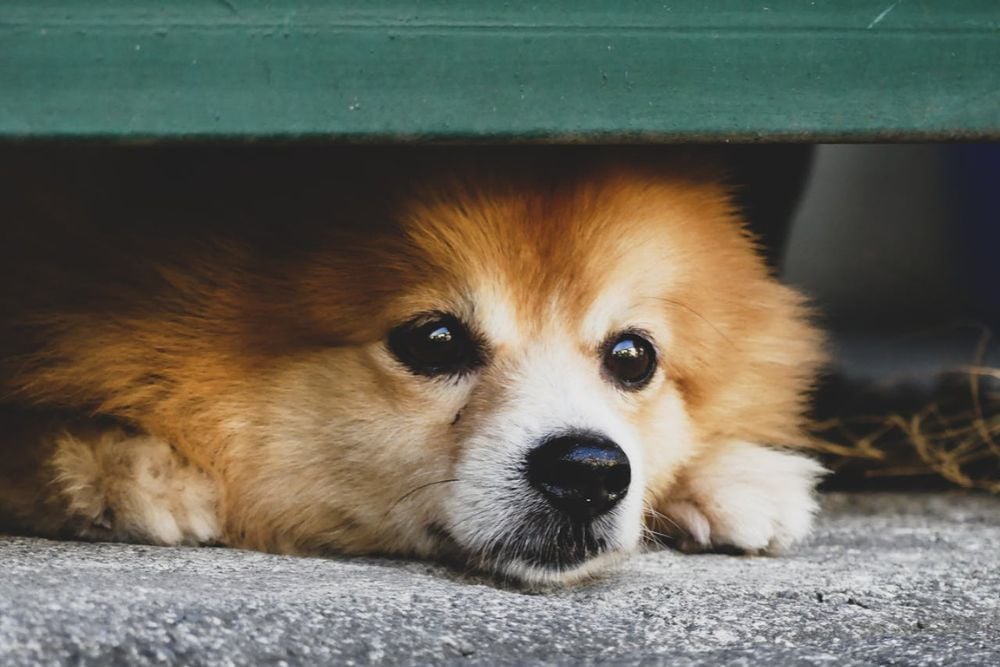
Every year, millions of dog owners dread the same thing — and it’s not the fireworks themselves. It’s the sight of their beloved pet trembling under the bed, panting uncontrollably, or scratching frantically at doors trying to escape an invisible threat.
If your dog is afraid of fireworks, you’re far from alone. A 2025 Rover survey found that 67% of pet parents say their dog fears fireworks. But what exactly makes those colorful bursts in the sky so terrifying for our four-legged friends? And more importantly, what can you actually do about it?
Let’s break down the real reasons dogs afraid of fireworks react the way they do — and walk through practical strategies backed by veterinary science.
Dogs Experience Sound Differently Than We Do
Here’s the thing most people don’t fully appreciate: dogs don’t just hear fireworks. They feel them.
Dogs can hear frequencies more than twice the range humans can, and they’re able to detect sounds roughly four times farther away. So when a firework goes off and you think, “That was pretty loud,” your dog is processing something far more intense.
According to research cited by Smithsonian Magazine, this heightened auditory sensitivity is one of the core reasons fireworks trigger such an extreme reaction.
Fireworks can reach up to 190 decibels at close range. That’s well beyond the threshold for pain in human ears — and dogs’ ears are significantly more sensitive. It’s not dramatic to say that for some dogs, fireworks don’t just sound scary. They sound dangerous.
It’s Not Just the Noise — It’s the Unpredictability
Volume alone doesn’t explain the full picture. After all, many dogs tolerate vacuum cleaners, barking dogs, or even thunderstorms with relative calm. So why do fireworks hit differently?
The answer lies in unpredictability. Thunderstorms come with warning signs — shifts in barometric pressure, wind changes, darkening skies. Dogs can sense these cues and brace themselves.
Fireworks, on the other hand, explode without any warning at all. There’s no pattern, no buildup, and no way for a dog to predict when the next boom will come.
According to Cornell University’s College of Veterinary Medicine, this combination of loud, sudden, and unpredictable noise triggers a genuine fight-or-flight response. The dog’s body floods with adrenaline, heart rate spikes, and stress hormones surge. It’s not misbehavior or overreaction — it’s a physiological survival response.
And there’s another factor people often overlook: smell. Fireworks release sulfur and other chemical compounds that dogs can detect far more acutely than we can. So your dog isn’t just hearing something alarming — they’re smelling something strange and potentially threatening, too.
The Role of Early Life Experiences
Not every dog panics during fireworks. You’ve probably noticed that some dogs barely lift their heads while others fall apart completely. Why the difference?
A big part of it comes down to early socialization. Puppies go through a critical developmental window — roughly between three and twelve weeks of age — during which their brains form lasting associations about what’s “normal” and what’s dangerous.
If a puppy is gradually and positively exposed to a variety of loud sounds during this window, they’re far more likely to handle fireworks calmly as adults.
But if a puppy misses that window, or worse, has a frightening experience with loud noises during it, the opposite happens. A single bad experience can create a lasting noise phobia. Researchers at the University of Bern found that these early associations are surprisingly durable and can shape a dog’s fear responses for life.
Rescue dogs deserve special mention here. Dogs that were neglected, abused, or poorly socialized as puppies are often especially vulnerable. They may already associate loud noises with danger, and fireworks can reactivate those old fears in a heartbeat.
Breed, Age, and Genetics All Play a Part
Your dog’s breed can influence how they respond to fireworks. A 2020 study on canine genetics and noise sensitivity found meaningful breed-level differences.
Cairn Terriers, Pembroke Welsh Corgis, and mixed-breed dogs tended to show higher fear responses to fireworks, while Labrador Retrievers, German Shepherds, and Miniature Poodles were generally less reactive.
Hunting breeds like Great Danes and Pointers also tend to handle loud noises better, likely because they’ve been selectively bred over generations to work around gunfire.
Age matters too. Older dogs sometimes develop new noise sensitivities they didn’t have when they were younger. Cornell’s veterinary researchers note that changing brain chemistry in aging dogs can worsen anxiety, meaning a dog who sailed through fireworks at age three might suddenly struggle at age nine.
Social Learning Between Dogs
Here’s a detail that catches many multi-dog households off guard: dogs learn fear from each other.
This phenomenon, known as social modeling, means that a calm dog living with a fearful dog may start mimicking the anxious behavior over time. If a dominant or older dog in the household panics during fireworks, the younger or lower-ranking dog often follows suit — even if they weren’t initially bothered.
The takeaway? If you have multiple dogs and one of them is afraid of fireworks, addressing that fear early can prevent it from spreading through your whole pack.
How to Recognize Firework Anxiety in Your Dog
Some signs of firework fear are obvious — hiding, shaking, barking. But others are subtler and easy to miss. Here’s what to watch for:
- Ears pinned flat against the head
- Excessive panting when it’s not hot
- Pacing or restlessness
- Drooling more than usual
- Refusing food or treats
- Attempts to escape (scratching at doors, jumping fences)
- Loss of bladder or bowel control in severe cases
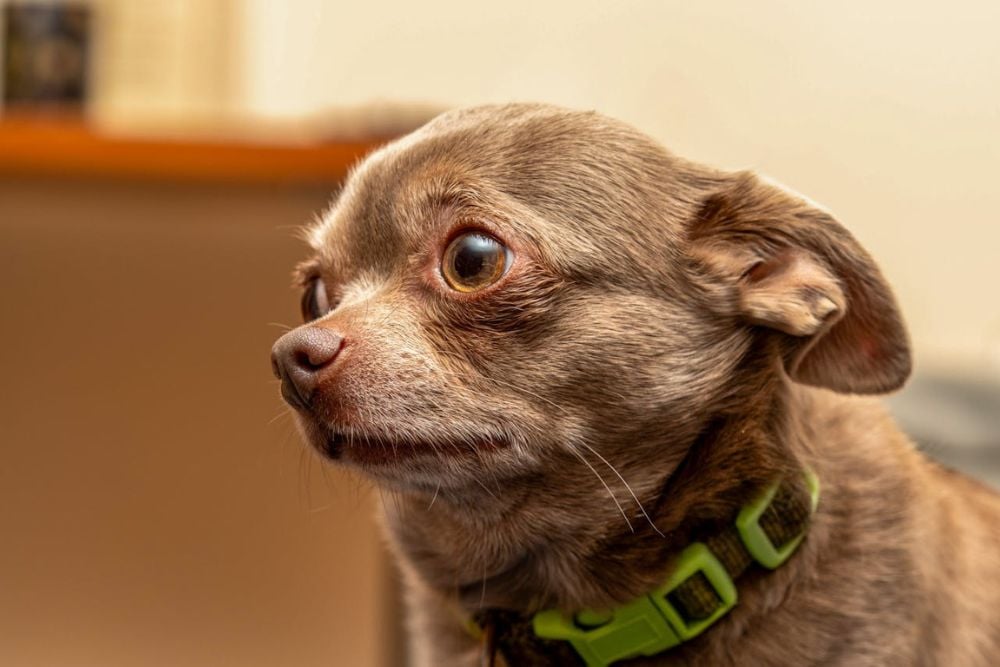
A study published in Scientific Reports found that backward-directed ear position was the single strongest behavioral indicator of firework-related fear in dogs. If you notice your dog’s ears flatten during distant booms, take it seriously — even if they’re not yet showing more dramatic signs.
Practical Ways to Help Dogs Afraid of Fireworks
Understanding why your dog is scared is only half the battle. Here’s what actually helps.
Create a Safe Retreat
Give your dog access to a quiet, interior room — ideally one without windows or with heavy curtains. If they’re crate-trained, leave the crate open with familiar blankets inside. Many dogs naturally seek out small, enclosed spaces when they’re frightened, so don’t fight that instinct. Let them choose where they feel safest.
Use Sound Masking
Close all windows and turn on a TV, fan, or white noise machine to help buffer the sound. Some owners find that calming music playlists designed for dogs make a real difference. The goal isn’t to drown out fireworks entirely — it’s to reduce the shock of each sudden boom.
Try Counterconditioning (Start Early)
This is one of the most effective long-term strategies. Weeks or months before firework season, play recorded firework sounds at a very low volume while giving your dog treats and playing with them. Gradually increase the volume over many sessions.
You’re teaching your dog to associate those sounds with positive experiences instead of danger. The ASPCA and most veterinary behaviorists recommend this approach as a first-line strategy.
Talk to Your Vet About Medication
For dogs with severe noise phobias, behavioral strategies alone may not be enough. Your veterinarian can prescribe anti-anxiety medications that should be given before fireworks begin — not during, when it’s often too late. Always do a trial run on a quiet day first so you know how your dog responds to the medication.
Stay Calm Yourself
Dogs read our emotional cues closely. If you’re tense, anxious, or making a big fuss, your dog may interpret that as confirmation that something really is wrong. Stay relaxed, speak in a normal tone, and be present. Your calm energy is one of the most powerful tools you have.
Keep Them Inside and ID’d
This one’s critical. Animal control officials across the U.S. report a 30% to 60% increase in lost pets between July 4th and 6th every year. Frightened dogs can bolt through open doors, jump fences, or break through screens. Keep your dog securely indoors, and make sure their collar ID and microchip information are up to date — just in case.
When to Seek Professional Help
If your dog’s firework fear is escalating year over year, or if they’re injuring themselves trying to escape, it’s time to consult a veterinary behaviorist. These specialists can design a customized treatment plan combining behavior modification with medication. The American College of Veterinary Behaviorists maintains a directory to help you find a board-certified professional near you.
Don’t wait until the night of a fireworks show to address the problem. The best time to start working on noise anxiety is months in advance, during a calm period.
The Bottom Line
Dogs afraid of fireworks aren’t being dramatic, stubborn, or misbehaving. They’re experiencing a genuine fear response driven by acute hearing, an inability to predict or understand the source of the noise, and — in many cases — a lack of early exposure that might have taught them these sounds aren’t threats.
The good news? With patience, preparation, and the right strategies, you can significantly reduce your dog’s distress. Whether that means creating a cozy retreat, working through a desensitization program, or consulting your vet about medication, you have real options. Your dog is counting on you to be their calm in the storm — or in this case, the fireworks show.